
Analysis Package P9 : Lignocellulosic Sugars and Lignin
Constituents Determined
Examples of the data reports generated can be viewed on the Celignis Database. Please log on to the guest account using email "test@celignis.com" and password "celignis".
Click here to place an order for determining Lignocellulosic Sugars and Lignin.
Request a QuoteLignocellulosic Sugars and Lignin
Analytical Procedure for Lignocellulosic Sugars and Lignin
☑ Step 1: Acid Hydrolysis of the Sample
In the case where three different types of extracted material exist (water-extracted, ethanol-extracted, and water- then ethanol-extracted) then the sample that has undergone both water and ethanol extraction is typically used for acid hydrolysis, unless otherwise requested by the customer.
The following steps are involved in the acid hydrolysis of a sample.
1. The moisture content of the sample is determined, in duplicate.
2. Approximately 300 mg (with the exact weight noted) of the sample is added to a pressure tube.
3. 3.00 mL of 72% H2SO4 is added by means of an automatic titrator, the weight of the acid added is noted.
4. The sample is mixed thoroughly with the acid using a glass rod, care is taken that no sample stays adherent to the sides of the tube, but instead stays in contact with the acid.
5. The tube is transferred to a water bath that is maintained at 30 degrees celcius.
6. Steps 2-5 are repeated for the duplicate sample.
7. Every 10 minutes the glass rod for each pressure tube is stirred so that the acid reaches all parts of the sample and complete hydrolysis occurs. This is a crucial step.
8. Exactly one hour after it is placed in the water bath the pressure tube is removed and placed on a scales and 84 mL of water added (with the weight of the added water recorded). Any acid/sample on the rod is removed from the rod at this point using this water.
9. A lid is screwed on the tube and the tube is inverted several times to ensure thorough mixing of the acid.
10. Two sugar recovery solution (SRS) pressure tubes are prepared in order to monitor the sugar-loss associated with the second-stage-hydrolysis. This involves the following steps:
(a) 348 microlitres of 72% H2SO4 is added to a test tube containing a solution containing a known weight (approximately 10 g) of a sugar standard. This standard should be of a similar sugar composition to that expected of the samples being analysed. The acid and sugar solution are thoroughly mixed.
(b) The sugar-acid mixture is transferred to a pressure tube which is then sealed.
11. All SRS and sample pressure tubes are placed in an autoclave which is run at 121 degrees celcius for 60 minutes.
12. After the temperature in the autoclave drops to under 80C the tubes are removed and are left (closed) in the lab until they reach room temperature.
13. The hydrolysates are then filtered (using vacuum suction) through filter crucibles of known weight and the resulting filtrate is stored.
14. Any residual solids are washed out from the tube using deionised water until all the Acid Insoluble Residue resides on the filter crucible.
☑ Step 2: Determination of ASL Using UV-Vis Spectroscopy
1. The hydrolysate (filtrate) from the Acid Hydrolysis Stage, is quantitatively transferred using a pipette to a 1 cm path-length (3 mL volume) quartz cuvette.
2. The UV-Visible (190-520nm) transmission spectrum of the sample is then obtained using the HP 8452A diode-array spectrophotometer.
3. If the absorbance at a given wavelength is outside of the linear region (considered to be between 0.7 and 1.0 absorbance units) then the sample is diluted with water until the value falls within this region.
3. This dilution and UV-Visible analysis is carried out twice for each hydrolysate, meaning that each sample will have four spectra collected (two spectra for each of the duplicate hydrolysates).
☑ Step 3: Hydrolysate Dilution and Storage
☑ Step 4: Gravimetric Determination of Klason Lignin
1. The filter crucibles from the Acid Hydrolysis Step are placed in an oven overnight and dried at 105C.
2. These crucibles are then weighed to determine the Acid Insoluble Residue content.
3. The crucibles are then placed in a Nabertherm L-240H1SN muffle furnace and the following program used:
(i) Ramp from room temperature to 105C.
(ii) Hold at 105C for 12 minutes.
(iii) Ramp to 250C at 10C/minute.
(iv) Hold at 250C for 30 minutes.
(v) Ramp to 575C at 20C/ minute.
(vi) Hold at 575C for 180 minutes.
(vii) Allow temperature to drop to 105C.
(viii) Hold at 105C until the samples are removed.
4. The fiter crucibles are then weighed and the Acid Insoluble Residue, and Acid Insoluble Ash content calculated.
5. The Klason Lignin content is then calculated by subtracting the Acid Insoluble Ash content from the Acid Insoluble Residue content.
☑ Step 5: Chromatographic Analysis of the Hydrolysate
Equipment Used for Lignocellulosic Sugars and Lignin Analysis
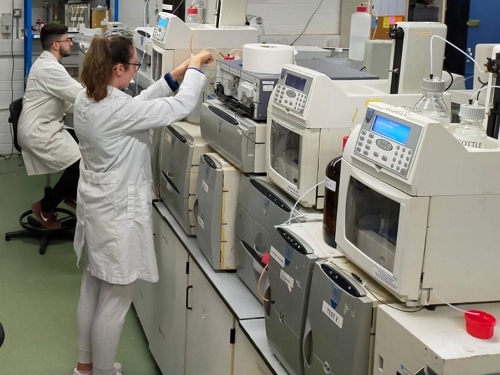
Ion Chromatography
A Dionex ICS-3000 system that is equipmed with electrochemical, conductivity, and ultraviolet-visible detectors.
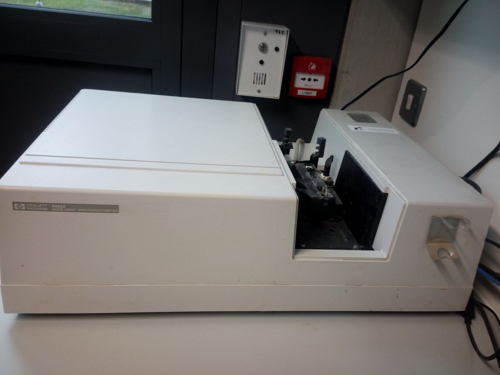
UV-Vis Spectrophotometer
A HP 8452A Ultraviolet-Visible spectroscopy device that is used for the determination of the acid soluble lignin concentration of the acid hydrolysate of samples.
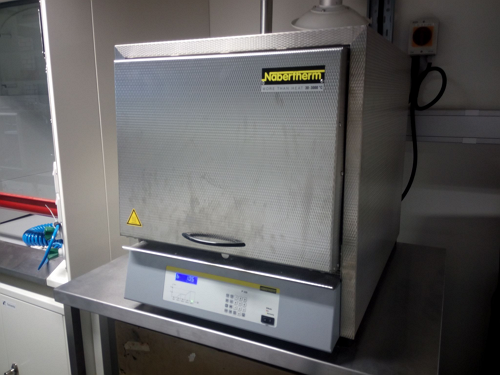
Muffle Furnace
A Nabertherm furnace is used for the determination of the ash content of samples and also in the analytical protocol for determining Klason lignin content.
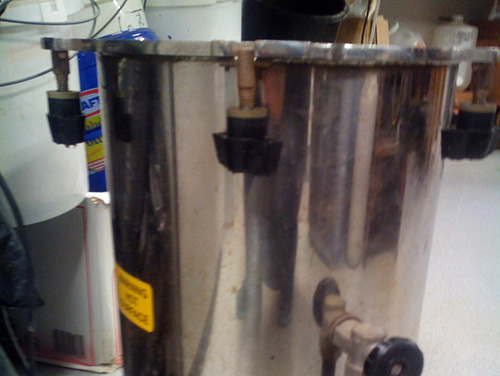
Autoclave
An autoclave is used in the protocols for the determination of the lignin and structural sugars (cellulosic and hemicellulosic) contents of samples.
The Organic Fraction of Municipal Solid Waste (OFMSW) contains paper and cardboard, an attractive cellulosic feedstock for bioethanol production. Waste paper/cardboard (WPC) was subjected to mild acid treatment in solids loadings from 20 to 27.5 %. Different doses of commercial enzyme cocktail and various adjuvants facilitating enzymatic saccharification were tested. Enzyme dosing of 3.75 FPU/g fiber with very slow fed-batch saccharification of 27.5 % (w/v) solids from model lignin-free paper pulp resulted in 12.6 % (w/v) total sugar after 74 h. Use of cheap non-catalytic waste protein adjuvants including Soymeal, Protisyr, Feather meal strongly improved enzymatic saccharification and reduced the overall process cost by reducing commercial enzyme dosing. After fermentation with the industrial yeast strain BMD44 (Cellusec 1.0) an ethanol titer of 5.77 % (v/v) was obtained using a reduced enzyme loading of 2.5 FPU/g of actual industrial WPC fiber. These results show the potential of economically profitable second-generation bioethanol production with WPC fiber. | |
Biochar is an engineered carbon-rich substance used for soil improvement, environmental management, and other diverse applications. To date, the understanding of how biomass affects biochar microstructure has been limited due to the complexity of analysis involved in tracing the changes in the physical structure of biomass as it undergoes thermochemical conversion. In this study, we used synchrotron x-ray micro-tomography to visualize changes in the internal structure of biochar from diverse feedstock (miscanthus straw pellets, wheat straw pellets, oilseed rape straw pellets, and rice husk) during pyrolysis by collecting a sequence of 3D scans at 50 C intervals during progressive heating from 50 C to 800 C. The results show a strong dependence of biochar porosity on feedstock as well as pyrolysis temperature, with observed porosity in the range of 7.41-60.56%. Our results show that the porosity, total surface area, pore volume, and equivalent diameter of the largest pore increases with increasing pyrolysis temperature up to about 550 C. The most dramatic development of pore structure occurred in the temperature range of 350-450 C. This understanding is pivotal for optimizing biochar's properties for specific applications in soil improvement, environmental management, and beyond. By elucidating the nuanced variations in biochar's physical characteristics across different production temperatures and feedstocks, this research advances the practical application of biochar, offering significant benefits in agricultural, environmental, and engineering contexts. | |
Polymer materials today face significant challenges, notably the utilization of green and low-carbon feedstock, the development of eco-friendly preparation processes, and effective material recycling. A promising solution to these challenges lies in the direct synthesis of covalent adaptable networks (CANs) from biomass sources, like lignin. However, the development of unmodified lignin CANs via catalyst-free methods has been a challenging task. Here, we report the successful preparation of lignin-based CANs (TERs) via phthalate monoester transesterification. In this system, lignin (PB1000) serves as hard segment and crosslinker, while the soft segment consists of a biomass diol (PripolTM 2033). By blending the ratio of hard to soft segments, we were able to tune the mechanical properties of the TERs (with lignin content ranging from 10 to 50 wt% and crosslink density increasing from 3600 mol/m3 to 47900 mol/m3). Monoester bonds within the TERs are highly dynamic at elevated temperatures (with an activation energy of 169.2 kJ mol-1), facilitating material recycling without the need for catalysts. Furthermore, TERs can be chemically recycled via alkaline solutions at 80 C. Notably, we demonstrate a potential application for this work in the form of a TER-based adhesive. In addition to its excellent adhesion properties, the TER adhesive exhibits thermal repair ability, removability, and degradability properties. This work provides a green and sustainable approach towards tackling the challenges associated with recycling of thermoset plastics. | |
The organic fraction of municipal solid waste (OFMSW) and refuse-derived fuel (RDF) mainly consisting of paper/cardboard can be used as feedstock for the production of cellulosic ethanol. In this paper, an efficient technology is described to convert waste paper/cardboard into cellulosic ethanol. The process involves separation of the OF from the other components in the waste stream. An acid pretreatment is used to liberate the cellulosic fibers and the accessibility of the enzyme Cellic CTEC3 loading 3.75-11.25 FPU/g paper in a fed-batch addition up to 22.5% solid yield, 15 g sugars/l with a saccharification yield up to 90%. A semi-simultaneous fermentation process (SSFP) with a saccharomyces cerevisae strain MDS130 capable of fermenting both pentoses and hexoses are growing an ethanol titer (%v/v) of 8.4% on pilon-plant scale. | |
Thallium(I) (Tl(I)) pollution has become a pressing environmental issue due to its harmful effect on human health and aquatic life. Effective technology to remove Tl(I) ions from drinking water can offer immediate societal benefits especially in the developing countries. In this study, a bio-adsorbent system based on nitro-oxidized nanocellulose (NOCNF) extracted from sorghum stalks was shown to be a highly effective Tl(I) removal medium. The nitro-oxidation process (NOP) is an energy-efficient, zero-waste approach that can extract nanocellulose from any lignocellulosic feedstock, where the effluent can be neutralized directly into a fertilizer without the need for post-treatment. The demonstrated NOCNF adsorbent exhibited high Tl(I) removal efficiency (>90% at concentration < 500 ppm) and high maximum removal capacity (Qm = 1898 mg/g using the Langmuir model). The Tl(I) adsorption mechanism by NOCNF was investigated by thorough characterization of NOCNF-Tl floc samples using spectroscopic (FTIR), diffraction (WAXD), microscopic (SEM, TEM, and AFM) and zeta-potential techniques. The results indicate that adsorption occurs mainly due to electrostatic attraction between cationic Tl(I) ions and anionic carboxylate groups on NOCNF, where the adsorbed Tl(I) sites become nuclei for the growth of thallium oxide nanocrystals at high Tl(I) concentrations. The mineralization process enhances the Tl(I) removal efficiency, and the mechanism is consistent with the isotherm data analysis using the Freundlich model. | |
Synthetic rubber produced from nonrenewable fossil fuel requires high energy costs and is dependent on the presumed unstable petroleum price. Natural rubber latex (NRL) is one of the major alternative sustainable rubber sources since it is derived from the plant 'Hevea brasiliensis'. Our study focuses on integrating sustainably processed carboxycellulose nanofibers from untreated jute biomass into NRL to enhance the mechanical strength of the material for various applications. The carboxycellulose nanofibers (NOCNF) having carboxyl content of 0.94 mmol/g was prepared and integrated into its nonionic form (-COONa) for its higher dispersion in water to increase the interfacial interaction between NRL and NOCNF. Transmission electron microscopy (TEM) and atomic force microscopy (AFM) analyses of NOCNF showed the average dimensions of nanofibers were length (L) = 524 +/- 203 nm, diameter (D) 7 +/- 2 nm and thickness 2.9 nm. Furthermore, fourier transform infra-red spectrometry (FTIR) analysis of NOCNF depicted the presence of carboxyl group. However, the dynamic light scattering (DLS) measurement of NRL demonstrated an effective diameter in the range of 643 nm with polydispersity of 0.005. Tensile mechanical strengths were tested to observe the enhancement effects at various concentrations of NOCNF in the NRL. Mechanical properties of NRL/NOCNF films were determined by tensile testing, where the results showed an increasing trend of enhancement. With the increasing NOCNF concentration, the film modulus was found to increase quite substantially, but the elongation-to-break ratio decreased drastically. The presence of NOCNF changed the NRL film from elastic to brittle. However, at the NOCNF overlap concentration (0.2 wt. %), the film modulus seemed to be the highest. | |
Activated carbons are promising sorbents that have been heavily investigated for the physisorptive storage of hydrogen. The industrial process for production of activated carbons is finely tuned and requires a reliable and uniform feedstock. While the natural biopolymer lignin, a byproduct of several industries, has received increasing interest as a potentially sustainable and inexpensive activated carbon feedstock, the ratio of the three aromatic monomers (S, G, and H) in lignin can be heavily affected by the lignin source and growing conditions. The aromatic ratio is known to influence the thermal behavior of the polymer, which could be problematic for production of consistent activated carbons at scale. With the goal of improving the consistency of activated carbons produced from lignins derived from different feedstocks, here we present a route to limiting the influence of lignin feedstock on activated carbon porosity and performance, resulting in a carbonization process that is resilient to changes in lignin source. Two different types of organosolv lignin (representing high S-unit content and high G-unit content feedstocks) were investigated. Resulting activated carbons exhibited a high surface area (>1000 m2 g-1) with consistent adsorptive properties and reasonable hydrogen uptake of up to 1.8 wt % at 1 bar and -196 C. These findings indicate that low-temperature carbonization conditions can be used to produce a consistent carbon material using organosolv lignins from any source, paving the way for more widespread use of lignin in large-scale carbon production. | |

See our pitches for the 2024 topics.
Lignin (Klason), Lignin (Acid Soluble), Acid Insoluble Residue, Ash (Acid Insoluble),
As P10 plus protein-corrected lignin, water-soluble sugars, uronic acids, acetyl content and starch.
Glucuronic Acid, Galacturonic Acid, Mannuronic Acid, Guluronic Acid, 4-O-Methyl-D-Glucuronic Acid, Iduronic Acid,
Total Sugars in Enzyme Hydrolysate, Glucose in Enzyme Hydrolysate, Xylose in Enzyme Hydrolysate, Arabinose in Enzyme Hydrolysate, Mannose in Enzyme Hydrolysate, Galactose in Enzyme Hydrolysate, Rhamnose in Enzyme Hydrolysate, Cellobiose in Enzyme Hydrolysate, Enzymatic Hydrolysis Kinetics, Cellulose Conversion Yield, Xylan Conversion Yield, Combined Sugar Yield, Cellulose Conversion Rate, Xylan Conversion Rate,
As P121 plus comparisons with data from the non-pretreated original sample, including: Increase in Cellulose Accessibility after Pre-Treatment, Percent Increase in Cellulose Conversion Efficiency, Percent Increase in Cellulose Conversion Rate.
As P9 but on the solid residue after enzymatic hydrolysis.
Formic Acid, Acetic Acid, Levulinic Acid, Furfural, Hydroxymethylfurfural,
Includes all hydrolysate sugars and kinetics in P121 and: Cellulose Conversion Yield, Cellulose Conversion Rate
Includes all hydrolysate sugars and kinetics in P121 and: Xylan Conversion Yield, Xylan Conversion Rate
Total Sugars in Enzyme Hydrolysate, Glucose in Enzyme Hydrolysate, Maltose in Enzyme Hydrolysate, a-Amylase Hydrolysis Kinetics, Glucoamylase Hydrolysis Kinetics,
Glucose, Xylose, Fructose, Sucrose, Mannose, Arabinose, Galactose, Rhamnose, Xylitol, Sorbitol, Trehalose, Mannitol, Arabinitol, Glycerol, Raffinose,
Levulinic Acid, Formic Acid, Hydroxymethylfurfural, Furfural, Acetic Acid, gamma-Valerolactone,
Xylobiose, Xylotriose, Arabinobiose, Arabinotriose,
Maltose, Maltotriose, Maltotetraose, Maltopentaose, Maltohexaose, Maltoheptaose, Maltooctaose,
Glucuronic Acid, Galacturonic Acid, Mannuronic Acid, Guluronic Acid, 4-O-Methyl-D-Glucuronic Acid, Iduronic Acid,
Gibberellic Acid, Indole-3-acetic acid, Indole-2-acetic acid, Indole-3-propionic acid, Indole-3-butyric acid, 6-Benzylaminopurine, Kinetin riboside, Abscisic acid, Salicylic acid,
beta-Carotene, Ergocalciferol (Vitamin D2), Alpha-tocopherol (vitamin E), Phylloquinone (Vitamin K1),
Thiamine (Vitamin B1), Riboflavin (Vitamin B2), Niacin (Vitamin B3), Niacinamide (vitamin B3), Pantothenic Acid (Vitamin B5), Pyridoxine (Vitamin B6), Folate (Vitamin B9), Cobalamin (Vitamin B12), Ascorbic Acid (Vitamin C),
Fucose, Mannitol, Glucose, Xylose, Mannose, Arabinose, Galactose, Rhamnose, Total Sugars, Glucuronic Acid, Galacturonic Acid, Mannuronic Acid, Guluronic Acid, Iduronic Acid,
Alanine, Arginine, Aspartic Acid, Asparagine, Cystine, Glutamic Acid, Glutamine, Glycine, Histidine, Isoleucine, Leucine, Lysine, Methionine, Phenylalanine, Proline, Serine, Threonine, Tryptophan, Tyrosine, Valine,
Aluminium, Calcium, Iron, Magnesium, Phosphorus, Potassium, Silicon, Sodium, Titanium,
Arachidic Acid, Behenic Acid, Decanoic Acid, Erucic Acid, Lauric Acid, Linoleic Acid, Linolenic Acid, Myristic Acid, Caprylic Acid, Oleic Acid, Palmitic Acid, Palmitoleic Acid, Stearic Acid, Lignoceric Acid,
Fucoxanthin, Astaxanthin, Chlorophyll-c, Chlorophyll-a, Chlorophyll-b, Lutein, beta-Carotene, Neoxanthin, Antheraxanthin, Violaxanthin,
Gibberellic Acid, Indole-3-acetic acid, Indole-2-acetic acid, Indole-3-propionic acid, Indole-3-butyric acid, 6-Benzylaminopurine, Kinetin riboside, Abscisic acid, Salicylic acid,
beta-Carotene, Ergocalciferol (Vitamin D2), Alpha-tocopherol (vitamin E), Phylloquinone (Vitamin K1),
Thiamine (Vitamin B1), Riboflavin (Vitamin B2), Niacin (Vitamin B3), Niacinamide (vitamin B3), Pantothenic Acid (Vitamin B5), Pyridoxine (Vitamin B6), Folate (Vitamin B9), Cobalamin (Vitamin B12), Ascorbic Acid (Vitamin C),
Chlorophyll-a, Chlorophyll-b, Lutein, beta-Carotene, Neoxanthin, Astaxanthin, Zeaxanthin, Antheraxanthin, Violaxanthin,
Biomethane Potential (BMP), Total Biogas Volume, Total Solids, Volatile Solids, pH, Biogas Methane Content, Biogas Carbon Dioxide Content, Biogas Oxygen Content, Biogas Hydrogen Sulphide Content, Biogas Ammonia Content,
Total Solids, Volatile Solids, pH, Chemical Oxygen Demand (COD), Phosphorus, Potassium, Ammonia, Carbon, Hydrogen, Nitrogen, Sulphur,
Total Solids, Volatile Solids, pH, Chemical Oxygen Demand (COD), Phosphorus, Potassium, Ammonia, Carbon, Hydrogen, Nitrogen, Sulphur,
Residual Biogas Potential (RBP), Total Biogas Volume, Total Solids, Volatile Solids, pH, Biogas Methane Content, Biogas Carbon Dioxide Content, Biogas Oxygen Content, Biogas Hydrogen Sulphide Content, Biogas Ammonia Content,
Acetic Acid, Lactic Acid, Propionic Acid, Butyric Acid, Isobutyric Acid, Valeric Acid, Isovaleric Acid,
Levoglucosan, Cellobiosan, Mannosan, Galactosan, Glucose, Xylose, Mannose, Arabinose, Galactose, Rhamnose, Fucose, Sucrose, Cellobiose, Total Sugars,
31 constituents including Phenol, Furfural, Syringol, and Vanillin
Specific Surface Area (Nitrogen Gas Adsorption), BET Isotherm (5 Point Using Nitrogen),
Specific Surface Area (Nitrogen Gas Adsorption), BET Isotherm (20 Point Using Nitrogen), Pore Volume (Using Nitrogen), Pore Size Distribution (Using Nitrogen), Average Pore Width (Using Nitrogen),
Specific Surface Area (Nitrogen Gas Adsorption), BET Isotherm (40 Point Using Nitrogen), Pore Volume (Using Nitrogen), Pore Size Distribution (Using Nitrogen), Average Pore Width (Using Nitrogen),
Gross Calorific Value, Net Calorific Value, Ash, Carbon, Hydrogen, Nitrogen, Sulphur, Oxygen,
Aluminium, Calcium, Iron, Magnesium, Phosphorus, Potassium, Silicon, Sodium, Titanium,
Antimony, Arsenic, Cadmium, Chromium, Cobalt, Copper, Lead, Manganese, Mercury, Molybdenum, Nickel, Vanadium, Zinc,
Ash Shrinkage Starting Temperature (Reducing), Ash Deformation Temperature (Reducing), Ash Hemisphere Temperature (Reducing), Ash Flow Temperature (Reducing),
Moisture, Ash Content (815C), Carbon, Hydrogen, Nitrogen, Sulphur, Oxygen, Chlorine, Volatile Matter, Fixed Carbon, Aluminium, Calcium, Iron, Magnesium, Phosphorus, Potassium, Silicon, Sodium, Titanium, Gross Calorific Value, Net Calorific Value, Ash Shrinkage Starting Temperature (Reducing), Ash Deformation Temperature (Reducing), Ash Hemisphere Temperature (Reducing), Ash Flow Temperature (Reducing),
As P393 plus inorganic carbon, organic carbon, TGA (under nitrogen and air), and inherent moisture
Aluminium, Calcium, Iron, Magnesium, Phosphorus, Potassium, Silicon, Sodium, Titanium,
Antimony, Arsenic, Cadmium, Chromium, Cobalt, Copper, Lead, Manganese, Mercury, Molybdenum, Nickel, Vanadium, Zinc,
Acenaphthene, Acenaphthylene, Anthracene, Benz[a]anthracene, Benzo[b]fluoranthene, Benzo[k]fluoranthene, Benzo[ghi]perylene, Benzo[a]pyrene, Chrysene, Dibenz[a,h]anthracene, Fluoranthene, Fluorene, Indeno[1,2,3-cd]pyrene, 1-Methylnaphthalene, 2-Methylnaphthalene, Naphthalene, Phenanthrene, Pyrene,
Time to Germination, Mean Shoot Length (Week 1), Mean Shoot Length (Week 2), Mean Shoot Length (Week 3), Mean Shoot Length (Week 4), Shoot Weight (Week 4), Mean Root Length (Week 4), Root Weight (Week 4),
As Deluxe package plus P383, SEM Imaging (P387) and Plant Growth Trials (P388)
Includes everything from P391 (Physical Properties Ultimate), P394 (Thermal Properties Ultimate), and P397 (Soil Amendment Ultimate)
Gross Calorific Value, Net Calorific Value, Ash, Carbon, Hydrogen, Nitrogen, Sulphur, Oxygen,
Aluminium, Calcium, Iron, Magnesium, Phosphorus, Potassium, Silicon, Sodium, Titanium,
Antimony, Arsenic, Cadmium, Chromium, Cobalt, Copper, Lead, Manganese, Mercury, Molybdenum, Nickel, Vanadium, Zinc,
Volatile Matter, Fixed Carbon, Moisture, Ash, Carbon, Hydrogen, Nitrogen, Sulphur, Oxygen, Gross Calorific Value, Net Calorific Value, Chlorine,
Ash Shrinkage Starting Temperature (Oxidising), Ash Deformation Temperature (Oxidising), Ash Hemisphere Temperature (Oxidising), Ash Flow Temperature (Oxidising),
Our Custom Chatbot is Integrated into the Celignis Database
We are proud to announce the launch of Celignis InSightAI, a powerful artificial intelligence (AI) tool developed by Celignis and integrated with the Celignis Database. It functions as a highly-customised chatbot, focused on providing insights and conclusions from the data displayed on the page. Once launched, and authorised by the user, it has access to the results presented on the Database page and the user can ask it questions about those results.
A 30-second video outlining some of its functionality is provided below.
Read...
We have secured funding for involvement in 2 collaborative research projects
We are very happy to announce that Celignis has been successful in 2 project proposals submitted for funding to the Circular Bio-based Europe Joint Undertaking (CBE JU) programme.
These projects will provide funding of 1m EUR to Celignis over the next few years and build upon the 4 projects (worth 1.6m EUR) we secured last year and the 3 projects (worth 1.5m EUR) secured in 2024.
The new projects are expected to start in the second quarter of 2026. More details will be provided about these projects in due course.
Celignis is a Full Industry Member of the Biobased Industries Consortium (BIC), which helps to steer the focus of research for the CBE-JU programme.
Click here to read about all of our current research projects and
Read...
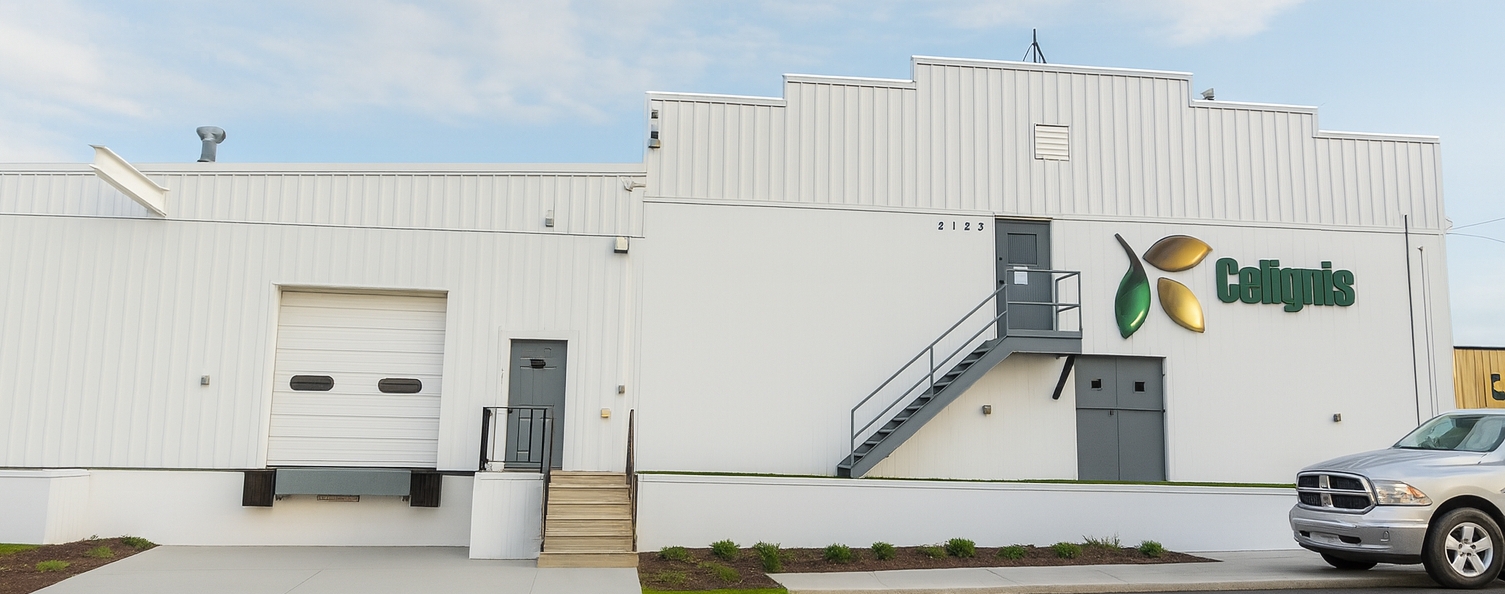
Iowa-based Facility will Offer Our Services to US-Based Clients
We're delighted to announce that today marks the official launch date of Celignis USA. This latest development in the extension of the Celignis family will offer all of Celignis's services to US-based clients. The 10,000 sq. ft facility is located in Waterloo, Iowa and leverages Celignis's 11 years of expertise in the bioeconomy.

Click here to read more about Celignis USA and our history leading to this point.
Read...
Articles cover bioprocess development as well as analytical services across many different sectors
We currently offer over 150 analysis packages, covering close to 400 different analytes. We have been proud to provide data to a diverse array of clients over the years, including many from research institutions. A recent literature search found a large number of peer-reviewed articles citing data provided by Celignis. These papers cover our
Read...